Why cold-water washing matters
Roughly 90% of the energy your washing machine uses isn't used to spin the drum or pump water, it's used to heat the water. Switching to cold cuts almost all of that energy use, which means a lower bill at the end of the month and meaningfully less carbon over the year.
But energy isn't the whole story. Cold water is also kinder to fabric. Hot cycles loosen dye, shrink natural fibers, and chew through the elastic in athletic clothes. Cold preserves color, holds shape, and extends the life of every piece in your closet.
The myths, and what's actually true
| Myth | Truth |
|---|---|
| "Cold water doesn't really clean." | It does, with a detergent formulated to dissolve cold. Modern surfactants don't need heat to lift soil. |
| "Hot is the only way to kill germs." | Hot helps, but most everyday loads don't need it. Reserve hot for towels, bedding when sick, or visibly soiled items. |
| "Stains require hot water." | Often the opposite, protein stains (blood, sweat, food) actually set in hot water. Cold preserves them for treatment. |
| "Cold cycles are slower." | Most modern washers run cold cycles at the same length as warm. The only thing missing is the heating step. |
When to use cold vs. warm vs. hot
Here's the cheat sheet, sourced from EPA + American Cleaning Institute guidance. Most loads in a typical household, easily 80%, should be running cold.
| Temperature | Use it for | Avoid for |
|---|---|---|
| Cold (60–80°F) | Most everyday clothes · darks · denim · athletic gear · delicates · most stains | Heavy grease · oily food spills |
| Warm (90–110°F) | Lightly soiled cottons · bath linens not from sickness · synthetic blends | Bright dyes (may bleed) |
| Hot (130°F+) | Whites with heavy soil · towels & bedding when someone is sick · cleaning rags | Almost everything else, wears clothes faster |
The one variable you can't skip: detergent
If you take one thing away from this guide: cold-wash performance comes down to whether your detergent dissolves at low temperature and rinses cleanly. Many traditional formulas were optimized for warm or hot water, so cold-cycle results can vary by product. A detergent built to dissolve and rinse at cold temperatures gives you a more predictable wash.
What works in cold (and rinses cleanly):
- Modern concentrated surfactants can activate well below 70°F.
- Pre-measured doses take the guesswork out of how much detergent to use per load.
- Single-use concentrated formats (like sheets) deliver an exact dose every cycle.
- Formulas built without optical brighteners simply don't include those additives in the mix to begin with.
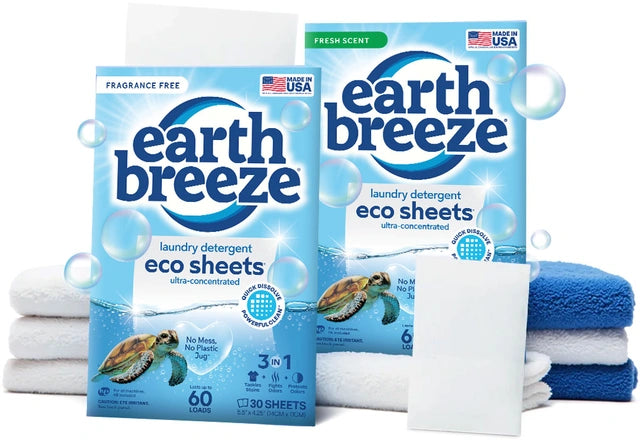
Earth Breeze Laundry Detergent Sheets
Earth Breeze Laundry Detergent Sheets are formulated to work in both hot and cold cycles, dissolving and rinsing cleanly. Pre-dosed and septic-safe. Free of parabens, optical brighteners, and dyes. Plastic-free packaging. About $0.20 per load on the 4-pack subscription. 60-day money-back guarantee.
Save up to 64% with 4 free gifts* →How to switch, without ruining anything
- Pick one cold-water-rated detergent. A pre-dosed sheet or strip is the easiest switch.
- Sort like you normally would, darks, lights, towels. Cold doesn't change sorting rules.
- Use the right cycle. "Normal" or "Colors" cold is fine. Don't use Quick Wash for the first month, the dwell time helps the new detergent prove itself.
- Don't overload. Cold needs water to circulate. Half-full drum, not stuffed.
- Pre-treat tough spots directly on the fabric. Cold-water detergent will lift the rest.
7 cold-wash tips that actually work
1. Toss the sheet in first
Drop the detergent before the clothes, it gives the surfactants a head start as the drum fills.
2. Don't overload the drum
Cold water needs room to circulate. A half-to-three-quarter-full drum cleans more reliably than a stuffed one.
3. Add an extra rinse for dense loads
An extra cold rinse helps move water and detergent through heavier loads like towels or bedding.
4. White vinegar = brightener
½ cup of distilled vinegar in the rinse cup keeps whites whiter on cold cycles.
5. Air-dry darks
Pair cold washing with line-drying darks, colors hold for years longer.
6. Wash inside-out
Reduces visible fading and pilling on cold cycles when fibers move freely.
7. Go easy on add-ins
Cold cycles work best with just your detergent doing the work, fewer extras means fewer things to rinse out.
Bonus · Run a monthly hot
Once a month, run an empty hot cycle to clean the machine itself. Cold-only households need this more.
FAQ
Will my whites get dingy?
With a detergent formulated for cold water, whites generally hold up well. Many people also add ½ cup of distilled vinegar to the rinse cup as a gentle freshening step.
What about workout clothes that smell?
Cold cycles with a concentrated surfactant formula handle most workout-clothes loads well. Synthetic activewear is generally recommended to be washed cool, check the garment care label for the manufacturer's specific guidance.
Can I wash sheets cold?
Yes, most sheet loads do fine on a cold cycle with a detergent formulated for cold water. Always follow the care label on your sheets for the manufacturer's specific guidance.
What if I have a septic system?
Earth Breeze Eco Sheets are septic-safe, so they're a fit for households on a septic system.